
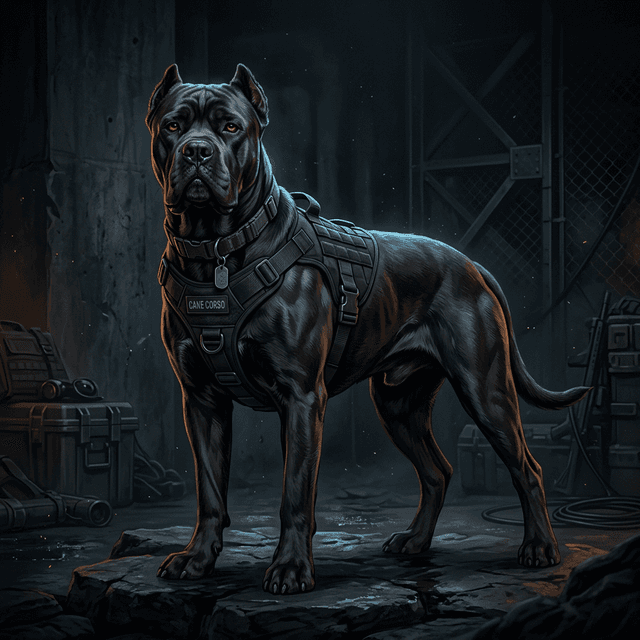
Cane Corso vs Rottweiler: Which Guardian is Right for You?
When choosing a formidable guardian breed, the Cane Corso and the Rottweiler frequently top the list. Both are powerful, deeply loyal, and possess an imposing physical presence. However, despite their similarities as working mastiff-type dogs, their temperaments, historical purposes, and training needs differ significantly.
This guide breaks down the core differences to help you decide which breed fits your lifestyle.
Historical Purpose: The Key to Their DNA
To understand a dog, you must understand what it was bred to do.
The Rottweiler: Originating in Germany, the "Rottweiler Metzgerhund" (Butchers' Dog) was primarily bred to drive cattle to market and pull carts of butchered meat. Their secondary role was protecting the butcher's money pouch. This history makes them strong, steady, and generally more willing to work in a cooperative partnership with their handler.
The Cane Corso: The Italian Mastiff is a direct descendant of Roman war dogs (the *Canis Pugnax*). Their traditional roles were much more varied and intense: hunting large game (like wild boar), guarding property, and serving as personal protectors. They are athletic, highly reactive to perceived threats, and deeply bonded to their immediate family, often remaining aloof to strangers.
Temperament and Family Dynamics
The Cane Corso Personality
- Bonding: Forms an incredibly intense, almost clingy bond with its immediate family. They are often "velcro dogs" at home.
- Strangers: Naturally suspicious and aloof. A Corso does not seek affection from people outside its circle.
- Protection: Highly reactive. They have a hair-trigger response to perceived threats on their property or toward their owners.
- Bonding: Deeply loyal and affectionate, often acting like giant lap dogs with their families.
- Strangers: Can be reserved, but a well-socialized Rottweiler is generally more accepting of new people and less inherently suspicious than a Corso.
- Protection: Calm and calculating. They typically assess a situation before reacting, often relying on their physical presence to deter threats before escalating.
- Size: The Cane Corso is typically taller and more athletic. Males often reach 27.5 inches at the shoulder and can weigh between 100-110+ lbs. Rottweilers are slightly shorter but thicker and more densely muscled, with males weighing between 95-135 lbs.
- Agility: The Corso is faster and more agile, capable of quick bursts of speed and high jumps. The Rottweiler is a powerhouse built for strength rather than speed.
- Bite Force: The Cane Corso possesses one of the strongest bite forces in the canine world, estimated around 700 PSI, compared to the Rottweiler's impressive 328 PSI.
- You want a powerful guardian that is generally more relaxed and easier to integrate into a busy social life.
- You prefer a dog that is eager to work and train in traditional obedience.
- You want a slightly less reactive dog that thinks before it acts.
- You want an elite, athletic property guardian.
- You have an active lifestyle and can provide significant mental and physical stimulation.
- You understand canine body language and can manage a dog with intense protective instincts and a naturally suspicious nature.
The Rottweiler Personality
Trainability and Stubbornness
Both breeds require an experienced handler, but the challenges they present differ.
Rottweilers are generally easier to train for traditional obedience. They have a stronger desire to please their handler and enjoy "working." They respond exceptionally well to positive reinforcement and clear, consistent boundaries.
Cane Corsos are intelligent but highly independent. They will often test boundaries to see if you actually mean what you say. Training a Corso requires unwavering consistency and a confident leader. They do not respond well to heavy-handed corrections, which can fracture trust, but they will exploit weakness if they sense a lack of leadership.
Physical Differences
Which Breed is Right for You?
Choose a Rottweiler if:
Choose a Cane Corso if:
Both breeds require immense commitment, early socialization (use our 100-Item Checklist), and lifelong training. Neither is suitable for a first-time dog owner.