
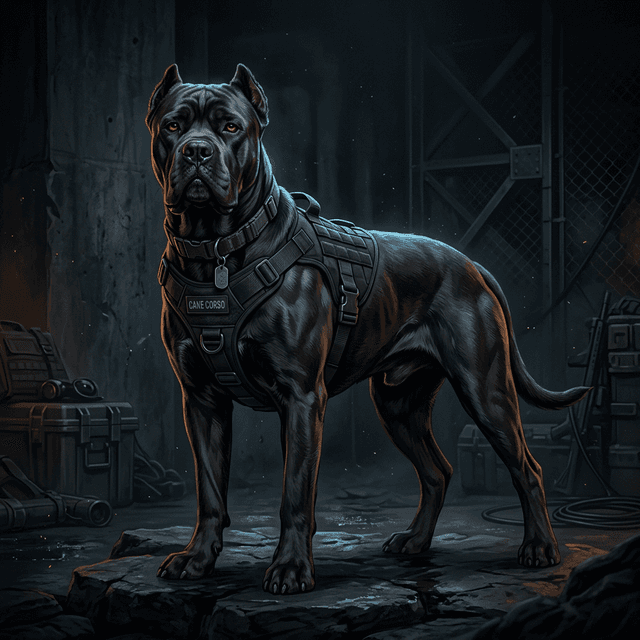
Guardian or Liability? The Science of Socializing Your Corso Before Week 16
There's a moment every new Cane Corso owner eventually faces. You're at the vet, or maybe just on a walk, and someone sees your dog and takes a visible step back. Sometimes they say it out loud: "Is he friendly?" Sometimes they just give you the look. And somewhere in the back of your mind, a question you've probably already been asking yourself gets a little louder—*am I doing this right?*
Because here's the thing nobody tells you clearly enough when you bring home a Corso puppy: the dog sitting next to you ten years from now—calm, discerning, rock-solid in public—or the dog that becomes a genuine management problem—those two outcomes are being shaped *right now*. In the first sixteen weeks. Before the dog even looks intimidating.
This isn't about making your Corso friendly with everyone. It's about something more specific, more useful, and honestly more achievable than that.
The Misunderstood Goal of Socialization
Most people think socialization means teaching a dog to *like* things. Like strangers. Like other dogs. Like kids on bikes and men in hats and garbage trucks. And while positive associations are part of the picture, that framing sets a lot of Corso owners up for frustration—because a guardian breed that enthusiastically loves every stranger it meets isn't a well-socialized Corso. It's a different kind of problem.
The real goal—especially for a breed with this much history and this much instinct baked in—is neutrality. Not excitement. Not fear. Neutrality.
A neutrally socialized Corso sees a stranger and thinks: *that's a person, not my concern*. Sees another dog across the street and thinks: *noted, moving on*. Encounters something unfamiliar and processes it without going into alert, without going into shutdown, without making your walk a negotiation. That's the standard. That's what you're working toward before week sixteen.
100-Item Checklist
The ultimate socialization protocol for giant breeds.
Why Week 16 is the Hard Deadline
The developmental science here is well-established and worth understanding. Puppies go through what behaviorists call a "socialization window"—a period of neurological development during which new experiences are filed away as normal rather than threatening. For dogs, this window opens around three weeks and begins to close somewhere between twelve and sixteen weeks, depending on the individual.
After that window closes, the brain's approach to novelty shifts. New things don't get categorized as neutral by default anymore—they get assessed more cautiously, and negative associations form faster and stick harder. This isn't a character flaw. It's a survival mechanism. But in a domestic dog, especially a large guardian breed living in a world full of strangers and stimuli, it's a mechanism you want to shape deliberately before it calcifies.
For the Cane Corso specifically, this matters more than average. These dogs are *wired* to notice things. To assess. To make decisions about what belongs and what doesn't. A Corso that hits sixteen weeks with wide, varied, positive exposure to the world becomes a dog that can make accurate assessments—calm, proportionate, reliable. A Corso that hits sixteen weeks having experienced almost nothing becomes a dog that's running threat assessments on everything, all the time. That's exhausting for the dog and dangerous for everyone around it.
The 100-Item Rule: Building a Neurologically Stable Dog
Here's a practical framework worth committing to: before your Corso puppy reaches sixteen weeks, expose them to at least 100 distinct people, places, sounds, surfaces, and situations. Not 100 of the same thing—100 *different* things. This is sometimes called the 100-Item Rule, and it's less a rigid prescription than a mindset shift.
It forces you to think in categories you might otherwise miss. Most owners remember to socialize their puppy to strangers and other dogs. Fewer remember to think about:
- Surfaces: Grates, gravel, wet grass, hardwood floors, metal stairs
- Sounds: Motorcycles, thunderstorms, crowd noise, construction, babies crying
- People types: Men with beards, people in hats, people in uniform, children running, elderly people with walkers or canes
- Contexts: Parking lots, vets, pet stores, outdoor markets, elevators
- Objects: Umbrellas opening, shopping carts, bicycles, skateboards, strollers
The goal with each item isn't to make the puppy ecstatic about it—it's to get them to the point of *indifference*. You're done when they look, process, and move on. That's the win.
Keeping a running checklist of what you've covered does two things: it keeps you accountable, and it shows you the gaps. Most owners who track this honestly are surprised by how many categories they've missed by week twelve. An interactive checklist—one you can update as you go—turns this from a vague intention into a concrete protocol. It also becomes part of your dog's developmental record, which matters more than people realize when you're building a complete health and training history.
Neutrality Training in Practice
So what does an actual neutrality-focused socialization session look like? It's quieter than you might expect.
You're not looking for your puppy to run up to strangers and demand attention. You're not trying to engineer excitement. You're looking for *relaxed engagement with the environment*. Take your puppy somewhere moderately busy—a park bench near a path, a quiet corner of a parking lot—and just... sit. Let things happen at a distance. Watch your puppy's body language. Ears soft, body loose, maybe a little curiosity, then back to normal? That's exactly what you want.
If your puppy is showing stress signals—yawning excessively, lip-licking, trying to hide behind you, or conversely going into high-alert with tail up and forward fixation—you're likely too close to the stimulus or the volume is too high. Back up. Create distance. Distance is your greatest tool in early socialization. The goal is to keep the puppy *under threshold*, meaning they're aware of the stimulus but not overwhelmed by it.
Reward calm. Not obedience necessarily—just calm existence in the presence of new things. A treat, a quiet "good," a moment of connection. You're building an emotional response pattern: new thing appears → I stay calm → good things happen. Repeat that enough times before week sixteen and it becomes the dog's default operating mode.
What Happens If You Miss the Window
This is the question people are afraid to ask, so let's address it directly. If your Corso is past sixteen weeks and socialization was limited or chaotic—what now?
First: don't panic, and don't give up. The window closing doesn't mean behavior is fixed forever. It means change requires more deliberate, consistent work. Dogs are adaptable. Adult Corsos can absolutely make significant progress with reactivity, anxiety, and social wariness—it just takes longer and usually benefits from professional guidance.
What you're doing post-window is less socialization and more counter-conditioning—systematically changing the emotional response to specific triggers through controlled, repeated exposure paired with high-value rewards. It works. It's slower. It requires patience and realistic expectations.
If you're dealing with a Corso who already shows significant reactivity or guarding behavior beyond what's appropriate, work with a certified behaviorist who has experience with guardian breeds specifically. A generic puppy trainer who mostly works with Retrievers isn't going to have the right framework for what you're dealing with.
Final Thought
The Cane Corso is one of the most magnificent breeds in existence. Confident, loyal, deeply bonded to their people—when they're right, they're really right. But that potential doesn't actualize on its own. It's built, deliberately, in a window that's shorter than most people realize.
Guardian or liability isn't a question of genetics alone. It's a question of what happens in those first sixteen weeks—and whether you showed up for it.
Start the checklist. Do the work. The dog on the other side of it is worth every Saturday morning at a crowded park...